
rhetoric aristotle pdf
Aristotle’s profound exploration of rhetoric, detailed in his treatise, remains foundational; it examines persuasive communication’s artful practice and enduring influence․
His work, often found in PDF format today, establishes a systematic approach to understanding how we construct arguments and engage audiences effectively․
For decades, journals like Philosophy and Rhetoric have explored the vital link between logic and rhetoric, as Aristotle initially posited․

Aristotle’s Definition of Rhetoric
Aristotle defines rhetoric as the ability to identify available means of persuasion in any given situation, a concept extensively studied in PDF analyses․
He views it as a counterpart to dialectic, focusing on contingent truths rather than universal principles, as explored in philosophical discourse and texts․
This definition highlights rhetoric’s practical nature and its dependence on context, crucial elements detailed within scholarly PDF resources available online․
Rhetoric as a Faculty
Aristotle conceptualizes rhetoric not merely as an art, but fundamentally as a faculty – an inherent human capacity, akin to seeing or feeling․
This faculty, extensively analyzed in numerous PDF studies of his work, is the ability to perceive the persuasive possibilities within any communicative act․
It’s not about applying pre-defined rules, but rather about discerning the specific means of persuasion appropriate to a particular audience, subject, and occasion․
This inherent capability distinguishes rhetoric from purely technical skills; it’s a cognitive ability everyone possesses, though some cultivate it more effectively than others․
The study of rhetoric, therefore, isn’t about creating persuasion, but about understanding how persuasion already operates within human interaction․
PDF versions of Rhetoric reveal Aristotle’s emphasis on the observer’s role – identifying and categorizing existing persuasive strategies rather than inventing entirely new ones․
He believed this faculty was crucial for civic life, enabling citizens to deliberate effectively and participate meaningfully in democratic processes, a point often highlighted in academic PDF commentaries․
Understanding rhetoric as a faculty allows for a nuanced appreciation of its ethical dimensions, as it acknowledges the inherent power of language and its potential for both good and ill, as discussed in detailed PDF analyses․
The Three Artistic Proofs: Ethos, Pathos, and Logos
Central to Aristotle’s system, readily accessible in countless PDF resources, are the three “artistic proofs” – ethos, pathos, and logos – the core means of persuasion․
These aren’t simply techniques, but appeals rooted in the nature of belief itself; they represent the fundamental ways humans are convinced by arguments․
Ethos concerns the speaker’s character and credibility, establishing trust with the audience – a crucial element detailed in PDF guides to rhetorical analysis․
Pathos appeals to the audience’s emotions, recognizing that feelings powerfully influence judgment, a concept thoroughly explored in academic PDF papers․
Logos employs logical reasoning and evidence, constructing a rational argument to demonstrate the truth of a claim, as meticulously outlined in PDF versions of Rhetoric․
Aristotle argued that effective rhetoric balances these three appeals; neglecting any one diminishes persuasive power, a point consistently emphasized in PDF interpretations․
The interplay between ethos, pathos, and logos isn’t additive, but synergistic; they work together to create a compelling and convincing message, as demonstrated in numerous PDF case studies․

Understanding these proofs is essential for both crafting persuasive arguments and critically evaluating the rhetoric of others, a skill honed through studying Aristotle’s work in PDF format․

Ethos: The Appeal to Credibility
Ethos, as defined by Aristotle and extensively detailed in available PDF resources, centers on establishing the speaker’s character and trustworthiness before an audience․
It’s not merely about personal reputation, but about demonstrating competence, goodwill, and moral virtue – qualities that inspire confidence and receptivity․
A speaker builds ethos through their language, delivery, and demonstrated knowledge; a strong ethos makes an audience more inclined to accept their claims, as explained in PDF analyses․
Aristotle identified three components of ethos: phronesis (practical wisdom), arete (virtue), and eunoia (goodwill), concepts frequently discussed in scholarly PDF articles․
Presenting oneself as knowledgeable and experienced enhances phronesis, while demonstrating honesty and integrity builds arete, both vital for persuasive success, per PDF guides․
Showing genuine concern for the audience’s well-being fosters eunoia, creating a connection based on shared values, a tactic often illustrated in PDF rhetorical examples․
Without a solid ethos, even logically sound arguments (logos) may fall flat, as audiences are less likely to trust the source, a point repeatedly made in PDF interpretations of Aristotle․
Therefore, cultivating ethos is paramount in effective rhetoric, a principle consistently emphasized throughout Aristotle’s work, readily available in PDF format․

Pathos: The Appeal to Emotion
Pathos, detailed in Aristotle’s work and modern PDF analyses, involves evoking emotional responses in the audience to enhance persuasiveness and connection;
The Role of Emotions in Rhetorical Effectiveness
Aristotle, as explored in readily available PDF versions of his Rhetoric, didn’t view emotions as obstacles to reason, but rather as integral components of effective persuasion․
He recognized that audiences are rarely, if ever, purely rational beings; their judgments are consistently influenced by feelings, biases, and pre-existing emotional states․
Therefore, a skilled orator, according to Aristotle, must understand and strategically utilize pathos – the appeal to emotion – to connect with the audience on a deeper level․
This involves identifying the emotions prevalent within the audience and crafting arguments that resonate with those feelings, whether it be joy, sorrow, anger, or fear․
However, Aristotle cautioned against manipulative emotional appeals, emphasizing the importance of ethical considerations and ensuring that emotions serve to support, not overshadow, the logical core of the argument․
Successfully harnessing pathos, as detailed in scholarly PDF resources, amplifies the impact of rhetoric, making it more memorable and ultimately, more persuasive․

Logos: The Appeal to Logic
Aristotle’s Rhetoric, often accessed as a PDF, highlights logos as the persuasive power of reasoned arguments and logical structures within discourse․
Logical Arguments and Reasoning in Rhetoric
Aristotle, within his seminal work on rhetoric – frequently studied through modern PDF versions – meticulously details the importance of logos, or logical appeal, in effective persuasion․
He emphasizes that a strong argument isn’t merely about presenting facts, but about how those facts are arranged and connected to form a compelling narrative․
This involves understanding the principles of reasoning, allowing a speaker or writer to construct arguments that resonate with an audience’s sense of rationality․
The core of logos lies in demonstrating a clear and coherent line of thought, establishing a logical connection between premises and conclusions․
Aristotle believed that mastering logical argumentation was crucial for anyone seeking to influence others, whether in a formal debate or everyday communication․
His framework provides a timeless guide to building persuasive cases grounded in sound reasoning, a skill still highly valued today, as evidenced by ongoing scholarly analysis in publications like Philosophy and Rhetoric․
Successfully employing logos requires careful consideration of the audience and the specific context of the rhetorical situation․
Types of Logical Arguments (Deductive, Inductive)
Aristotle, as detailed in readily available PDF versions of his Rhetoric, categorized logical arguments primarily into two distinct types: deductive and inductive reasoning․
Deductive arguments proceed from general principles to specific conclusions; if the premises are true, the conclusion must be true – a hallmark of formal logic․
Conversely, inductive arguments move from specific observations to broader generalizations; the conclusion is probable, but not guaranteed, even with true premises․
He recognized that both approaches had a place in persuasive rhetoric, though he favored deductive reasoning for establishing certainty․
Understanding these distinctions is vital for both constructing and evaluating arguments, a point continually reinforced in contemporary rhetorical studies․
Publications like Philosophy and Rhetoric frequently analyze how these argument types function in various communicative contexts․
Aristotle’s classification provides a foundational framework for analyzing the logical structure of persuasive appeals, remaining relevant for modern rhetorical analysis․

The Five Canons of Rhetoric
Aristotle’s Rhetoric, often accessed as a PDF, outlines five essential canons: invention, arrangement, style, delivery, and memory—cornerstones of effective communication․
Invention (Heuristics)
Invention, the first of Aristotle’s five canons, detailed within his Rhetoric – frequently studied via PDF resources – concerns discovering the available means of persuasion for any given rhetorical situation․
This isn’t about creating arguments from nothing, but rather identifying the existing facts, evidence, and logical pathways relevant to the topic at hand․ Aristotle categorized these means into artistic proofs (ethos, pathos, and logos) and inartistic proofs․
Inartistic proofs, like witnesses or documentary evidence, are pre-existing; artistic proofs are constructed by the rhetor․ Heuristics, or methods for discovering arguments, play a crucial role here, prompting exploration of lines of reasoning like definition, comparison, cause and effect, and testimony․
Effective invention requires a deep understanding of the audience, the subject matter, and the broader context, allowing the speaker to tailor their arguments for maximum persuasive impact․ This stage is foundational, as a weak invention process undermines all subsequent rhetorical efforts․
Arrangement (Taxeis)
Following invention, Aristotle’s second canon, arrangement (or taxeis), focuses on structuring the discovered arguments for optimal persuasive effect, a process often explored in modern PDF analyses of his Rhetoric․
He outlined a classical structure for speeches, comprising the introduction, narration, confirmation, refutation, and conclusion․ The introduction aims to gain audience attention and establish credibility․ Narration presents the facts of the case, while confirmation lays out the arguments in support of the speaker’s position․
Refutation addresses opposing arguments, weakening their validity․ Finally, the conclusion summarizes the key points and leaves a lasting impression․ This isn’t a rigid formula, but a guideline for logical flow․
Proper arrangement ensures clarity and coherence, guiding the audience through the speaker’s reasoning․ A disorganized speech, even with strong arguments, will likely fail to persuade․ Understanding Aristotle’s principles remains vital for effective communication․
Style (Lexis)
Aristotle’s third canon, style (lexis), concerns the artful expression of thoughts through language – a crucial element frequently analyzed in contemporary PDF studies of his Rhetoric․
He emphasized the importance of clarity, appropriateness, and ornamentation․ Clarity demands precise language, avoiding ambiguity․ Appropriateness requires tailoring language to the audience, occasion, and subject matter․ Ornamentation involves using figures of speech – metaphors, similes, and hyperbole – to enhance persuasiveness and aesthetic appeal․
Aristotle cautioned against excessive ornamentation, which could appear pretentious or obscure the message․ He advocated for a balanced approach, prioritizing clarity and appropriateness above all else․
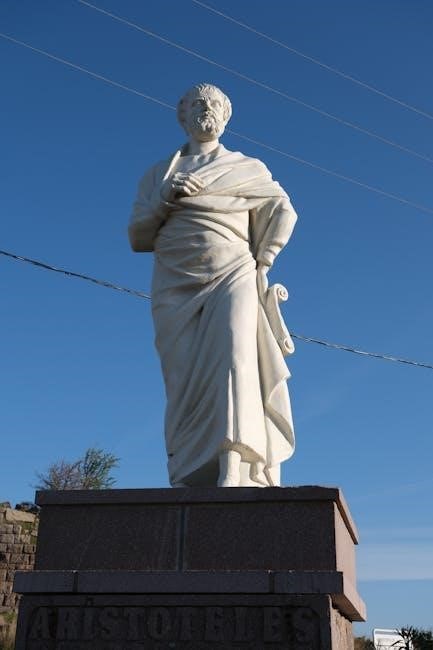
Effective style isn’t merely about beautiful language; it’s about choosing words that resonate with the audience and reinforce the speaker’s arguments․ Mastering lexis is essential for impactful communication, ensuring the message is both understood and remembered․

Delivery (Hypokrisis)
Aristotle’s final canon, delivery (hypokrisis), encompasses how the rhetorical message is presented – voice modulation, gesture, and overall performance, often dissected in modern PDF analyses of his work․
He believed delivery was vital, arguing it could sway an audience even with a weak argument․ However, he stressed that delivery should appear natural, not contrived․ Effective delivery involves controlling one’s voice – pitch, rhythm, and volume – and using gestures purposefully to emphasize key points․
Aristotle also considered the speaker’s demeanor and emotional state, advocating for authenticity and appropriate emotional expression․ A genuine connection with the audience is paramount․
While acknowledging its power, he cautioned against prioritizing delivery over substance․ A compelling message, skillfully delivered, is the most potent form of rhetoric, ensuring lasting impact and persuasive success․
Memory (Mneme)
Aristotle’s mneme, or memory, represents the fifth canon of rhetoric, focusing on the speaker’s ability to recall and effectively utilize arguments without relying heavily on written notes – a skill frequently examined in contemporary PDF studies of his theories․
He didn’t advocate for rote memorization of entire speeches, but rather for remembering key ideas, arguments, and supporting evidence․ This allowed for flexibility and adaptation during delivery, responding to audience reactions and unforeseen circumstances․
Aristotle suggested using techniques like loci method – associating ideas with familiar places – to aid recall․ A well-prepared speaker, possessing strong memory skills, could maintain eye contact and engage more directly with the audience․
Ultimately, memory serves to enhance spontaneity and authenticity, preventing the speech from sounding overly rehearsed or detached, contributing to a more persuasive and impactful presentation․

Rhetoric and Dialectic: A Comparison
Aristotle viewed rhetoric and dialectic as related yet distinct arts; his insights, readily available in PDF form, highlight their contrasting aims and audiences․
Distinctions Between Rhetoric and Dialectic
Aristotle, as detailed in accessible PDF versions of his Rhetoric, meticulously differentiated between rhetoric and dialectic, establishing key distinctions in their purpose and scope․
Dialectic, he argued, concerns demonstrating truth based on logical necessity, primarily engaging with knowledgeable audiences already predisposed to philosophical inquiry․ Its focus is on established principles and universal truths․
Conversely, rhetoric aims to persuade specific audiences, often lacking specialized knowledge, to adopt a particular belief or course of action․ It operates within the realm of probability and practical concerns, rather than absolute certainty․
While dialectic seeks truth through reasoned debate, rhetoric utilizes available means of persuasion – ethos, pathos, and logos – to achieve a desired effect․
Aristotle emphasized that rhetoric is adaptable to specific contexts and audiences, unlike the more rigid structure of dialectical argument․ This flexibility is crucial for effective communication in real-world scenarios․
Essentially, dialectic is about discovering truth, while rhetoric is about effectively communicating and enacting it․
The Interrelationship Between Logic and Rhetoric
Aristotle, in his foundational work on rhetoric – readily available in modern PDF formats – posited a crucial, constitutive connection between logic and persuasive communication, challenging earlier separations․
He didn’t view rhetoric as simply manipulative artistry, but as a practical application of logical principles tailored to specific audiences and contexts․ Logos, the appeal to logic, is one of rhetoric’s three core pillars, demonstrating this inherent link․
While dialectic focuses on demonstrating truth through rigorous logical deduction, rhetoric employs logic strategically to construct persuasive arguments․ It adapts logical reasoning to the beliefs and values of the audience․
The effective rhetorician understands formal logic but also recognizes its limitations in real-world persuasion․
Journals like Philosophy and Rhetoric continue to explore this dynamic, highlighting how logical structures underpin compelling rhetorical strategies․
Therefore, rhetoric isn’t opposed to logic, but rather a skillful deployment of it for practical persuasive ends․
Critical Evaluation of Online PDF Resources
Accessing Aristotle’s Rhetoric via online PDF resources offers convenience, but demands critical evaluation․ Numerous versions exist, varying in translation quality and editorial accuracy․
Prioritize PDFs sourced from reputable academic institutions or established publishers to ensure fidelity to the original text․ Beware of unverified sources offering potentially flawed interpretations․
Compare multiple translations to identify nuances and potential biases introduced by different translators․ Consider the translator’s credentials and scholarly reputation․
Examine the PDF’s accompanying notes and introductions; these should demonstrate a sound understanding of Aristotelian scholarship and rhetorical theory․
Cross-reference key concepts with established commentaries and academic articles to verify the PDF’s accuracy and completeness․
Always assess the PDF’s overall presentation and formatting for clarity and professionalism, indicators of careful scholarly work․